


Contents
A Tết bonus or "13th-month salary" is not required by Vietnamese law. Article 104 of the 2019 Labour Code leaves bonuses to the employer, based on business results and how well each employee performed. The picture changes once the promise is in writing: if your employment contract, the collective agreement or the company's bonus policy already provides a 13th-month salary or a Tết bonus, the employer has to pay it. A typical pro-rated case: a monthly salary of VND 12 million and seven months worked in the year gives a 13th-month payment of VND 7 million.
Key takeaways
- No law sets a minimum Tết bonus; each company's bonus policy decides who gets what.
- The bonus policy must be published at the workplace and drawn up after consulting the employee representative body, if there is one.
- Once a bonus is written into a contract, collective agreement or policy, it is binding; late or missing payment can be fined under Decree 283/2026/ND-CP.
- The 13th-month salary is usually pro-rated: salary × months worked ÷ 12.
- Whether you get a bonus after resigning before Tết depends on the conditions in the policy.
- A Tết bonus is taxable employment income, added to the month it is paid.
Is a Tết bonus mandatory?
Under Article 104 of the Labour Code, a bonus is money, property or another form of reward that the employer gives based on business results and the employee's level of task completion. The employer decides the bonus rules and publishes them at the workplace after consulting the grassroots employee representative organisation, where one exists.
In practice that means:
- There is no statutory minimum. In a bad year, a company may pay a small bonus or none at all.
- "13th-month salary" is not a legal term. It is the common name for a year-end bonus, often equal to one month's pay, that many Vietnamese employers offer by custom.
- A written promise is enforceable. Contracts and collective agreements bind both sides, so a clause such as "13th-month salary equal to one month's basic salary" cannot simply be dropped.
These rules apply equally to foreigners working in Vietnam under a Vietnamese employment contract. If your package was negotiated as an annual figure, check whether it was split into 12 or 13 payments; many expat offers state this explicitly.
Penalties for employers
Since 10 September 2026, wage and bonus violations are fined under Decree 283/2026/ND-CP, which replaced Decree 12/2022/ND-CP. Organisations pay double the amounts for individual employers below.
| Violation | Fine for an individual employer |
|---|---|
| Not publishing the bonus policy, or not consulting the employee representatives | VND 5–10 million |
| Not paying, underpaying or paying late what the contract provides, affecting 1–10 employees | VND 5–10 million |
| The same, 11–50 employees | VND 10–20 million |
| The same, 51–100 employees | VND 20–30 million |
| The same, 101–300 employees | VND 30–40 million |
| The same, 301 employees or more | VND 40–50 million |
The employer must also pay the full amount owed plus interest on the late payment.
Who is eligible?
Eligibility comes from the bonus policy. Common conditions include:
- a minimum length of service in the year, for example three or six months;
- still being employed on the payment date;
- a performance rating, with different multipliers for each grade;
- the type of contract, since some firms exclude probation staff or freelancers.
How the 13th-month salary is calculated
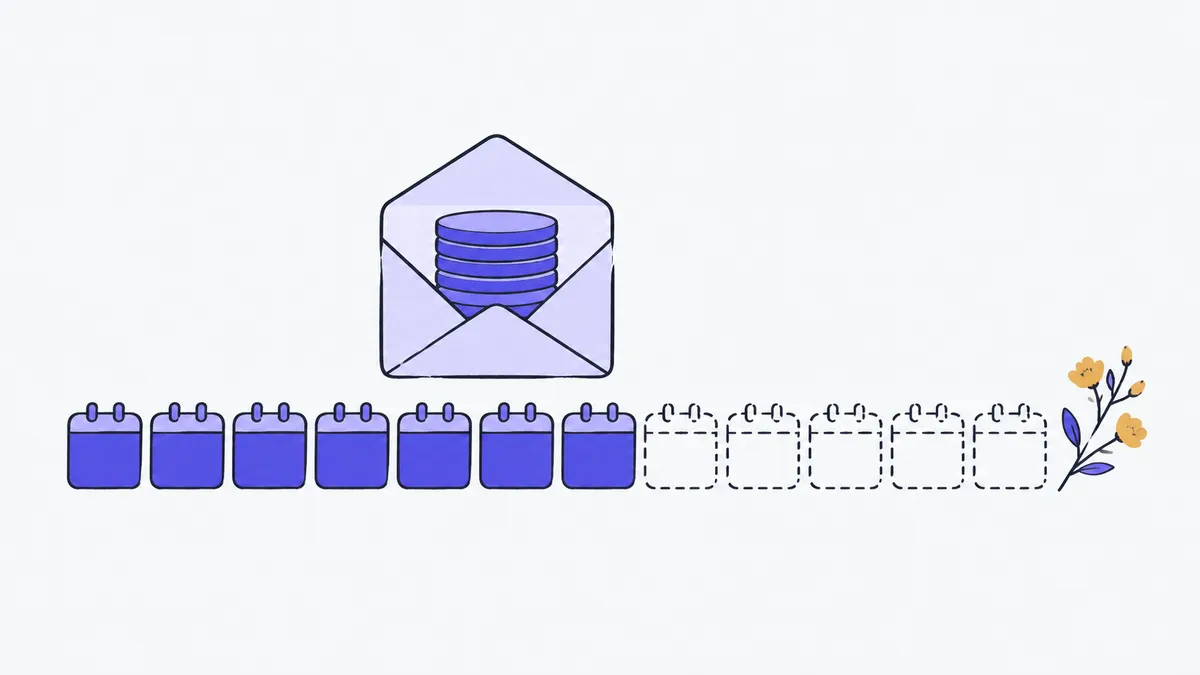
The most common formula is pro-rating by months worked:
13th-month salary = salary (as defined in the policy) × months worked in the year ÷ 12
The policy should say which salary is used: basic contract salary, average monthly pay or total income.
| Monthly salary | 12 months worked | 9 months | 7 months | 3 months |
|---|---|---|---|---|
| VND 8,000,000 | VND 8,000,000 | VND 6,000,000 | VND 4,666,667 | VND 2,000,000 |
| VND 12,000,000 | VND 12,000,000 | VND 9,000,000 | VND 7,000,000 | VND 3,000,000 |
| VND 20,000,000 | VND 20,000,000 | VND 15,000,000 | VND 11,666,667 | VND 5,000,000 |
| VND 30,000,000 | VND 30,000,000 | VND 22,500,000 | VND 17,500,000 | VND 7,500,000 |
Amounts before personal income tax. Policies may round partial months (15 days or more counts as a month) or pay by working days.
The date calculator counts the exact months and days from your start date to 31 December 2026.
When is it paid?
The law sets no payment date. Most employers pay in December or in the last lunar month, before the Tết break. In 2027 the first day of Tết is Saturday 6 February and civil servants are off from 4 February, so bonuses are normally paid before then. If the policy names a date, paying after it counts as late payment.
Leaving your job before Tết
This is the classic year-end question, and the answer is in the bonus policy:
- "Employed on the payment date" condition: if you leave before that date, you get no bonus.
- 13th-month salary pro-rated by months worked in your contract or policy: you can still receive the share for the months you worked.
- The policy is silent: the employer has no duty to pay, but you can ask and negotiate.
When a contract ends, Article 48 of the Labour Code requires both sides to settle everything owed within 14 working days, extendable to no more than 30 days in specific cases. A contractual 13th-month salary is part of that settlement. Before resigning at year end, read the policy, ask HR in writing and consider leaving after the payment date.
How the bonus is taxed
Bonuses, including the 13th-month salary, gifts in kind and prizes from company year-end parties, are employment income under the Personal Income Tax Law 109/2025/QH15 and Decree 253/2026/ND-CP. For tax residents, the employer adds the bonus to that month's salary and withholds tax on the five-bracket scale (5% to 35%), after the VND 15.5 million personal deduction and VND 6.2 million per registered dependant.
Example: gross salary VND 20 million, no dependants, Tết bonus of VND 20 million paid with the January 2027 salary. Tax that month is VND 1,740,000 instead of the usual VND 120,000. Because the annual settlement spreads income over the whole year, about VND 620,000 comes back after finalisation, assuming the salary stays the same all year.
Other points for expats:
- Timing: income is taxed when it is paid, so a 2026 bonus paid in January or February 2027 falls into tax year 2027.
- Former employees and contracts under three months: bonuses of VND 5 million or more per payment have 10% withheld instead of the progressive scale.
- Non-residents pay a flat 20% on Vietnam-sourced employment income, with no family deductions.
The Tết bonus tax calculator shows the net bonus straight away, the ready-made table for a VND 20 million Tết bonus lists common cases, and the personal income tax calculator handles any month or the annual settlement. For the full rules on monthly salary tax, see Vietnam personal income tax 2026.
Frequently asked questions
Can my employer skip the Tết bonus?
Yes, unless it is promised in your contract, the collective agreement or the published bonus policy. If it is promised and not paid, the employer is in breach and can be fined and ordered to pay with interest.
Is the 13th-month salary always one month's pay?
No. The amount is whatever the contract or policy says. One month's salary is common, but some employers pro-rate it or apply performance multipliers.
I joined in June. Do I get a 13th-month salary?
Usually a pro-rated one: salary × months worked ÷ 12, unless the policy requires a minimum length of service.
Is the Tết bonus subject to social insurance?
Bonuses under Article 104 of the Labour Code are generally not included in the salary used for compulsory social insurance contributions. They are, however, subject to personal income tax.
Are company Tết gifts and lucky money taxed?
Yes. Gift baskets, vouchers and lucky money from your employer are employment benefits and are added to your taxable income for the month. Lucky money between family members and friends is not taxed.
Free tools used in this article
- Tết Bonus Tax Calculator →See the extra income tax on a Tết bonus or 13th-month pay in Vietnam and what you actually take home.
- Vietnam Personal Income Tax Calculator →Work out Vietnamese personal income tax on salary, monthly or for the year, with the 2026 brackets.
- Gross ↔ Net Salary Calculator →Convert Vietnamese gross salary to net and back: insurance, family deductions and 2026 income tax.
- Date calculator →Days between two dates, working days, adding or subtracting dates, and exact age.
#tet bonus#13th month salary vietnam#vietnam labour code#bonus tax